

Multilingual communication in healthcare is essential for helping patients, doctors, nurses, specialists, and healthcare teams understand one another clearly. When patients and providers speak different languages, communication gaps can affect consultations, care coordination, patient education, and follow-up.
Qordenate helps healthcare organisations overcome these barriers with real-time live translation, universal captions, multilingual chat, and VoiceBridge. By allowing participants to communicate in their preferred languages during the same meeting, Qordenate supports more accessible, inclusive, and efficient healthcare communication.
What is multilingual healthcare communication?
Multilingual healthcare communication is the ability for patients, healthcare professionals, caregivers, and support staff to communicate effectively across different languages. It combines technologies such as real-time AI translation, live translated captions, and multilingual chat to help participants understand one another during consultations, virtual appointments, training sessions, and collaborative meetings. By reducing language barriers, multilingual healthcare communication helps create more accessible, inclusive, and efficient interactions across the healthcare ecosystem.
Why Healthcare Language Barriers Remain a Challenge
Healthcare language barriers occur when patients, healthcare professionals, or caregivers cannot communicate effectively because they speak different languages, making it harder to exchange important medical information and collaborate during care.
Healthcare organisations increasingly serve diverse populations. Hospitals, clinics, telehealth providers, research institutions, and public health organisations may communicate with patients and professionals from different linguistic backgrounds every day.
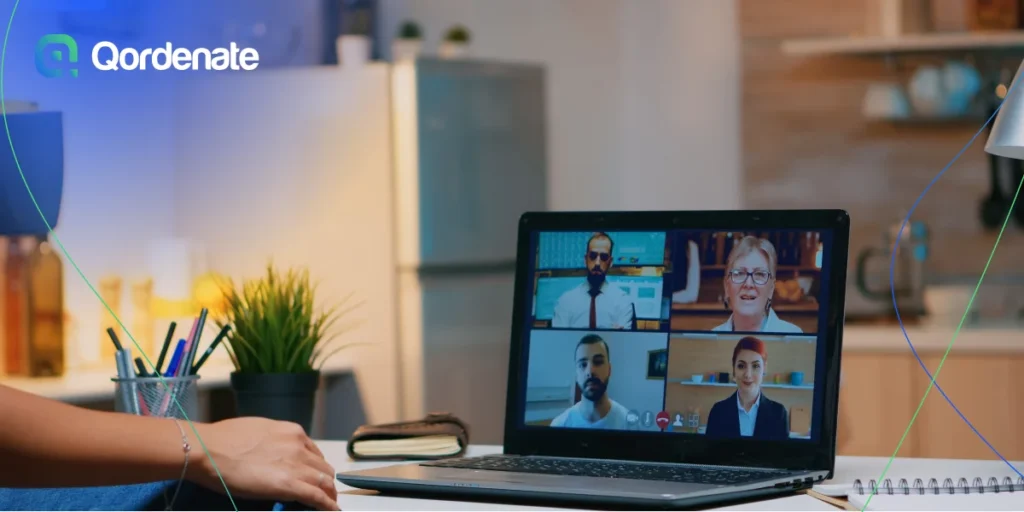
A virtual consultation may include a Spanish-speaking patient, a Korean-speaking nurse, and an English-speaking doctor. Without effective language translation in healthcare, these conversations can become difficult to manage.
Common healthcare language barriers can lead to:
- Patients struggling to explain their symptoms
- Healthcare professionals repeating information
- Delays in virtual consultations
- Difficulty understanding instructions
These challenges can affect both patient-provider communication and collaboration between healthcare professionals. For healthcare organisations, improving multilingual healthcare communication is an important step towards creating more accessible and patient-centred services.
How Qordenate Supports Multilingual Healthcare Communication
Qordenate is a video meeting platform with real-time AI translation built into the meeting experience. Instead of requiring every participant to speak the same language, it allows people to communicate in their preferred language while following the conversation in theirs.
Qordenate supports language translation in healthcare through features such as:
- Real-time live translation
- Universal captions
- Multilingual in-meeting chat
- VoiceBridge accessibility mode
- Browser-based meetings
- Enterprise-grade security features
The platform supports 33+ languages, allowing healthcare teams to communicate across multiple languages in real time. This makes Qordenate useful for virtual consultations, multilingual healthcare meetings, international healthcare teams, training sessions, and other healthcare communication scenarios.
Real-Time Live Translation for Virtual Healthcare
Telehealth has made it easier for patients to access healthcare remotely. However, language differences can still create challenges during virtual appointments.
Real-time live translation for healthcare can help participants communicate naturally without requiring everyone to speak the same language.
For example, a virtual consultation may include:
- A patient speaking Italian
- A nurse speaking Japanese
- A doctor speaking German
- A family member joining remotely from another country
With Qordenate’s real-time voice translation, each participant can speak in their preferred language and follow the conversation in theirs.
This can help healthcare teams:
- Reduce communication delays
- Improve patient participation
- Support multilingual patient communication
- Make remote appointments more accessible
The goal of healthcare translation is not simply to convert words from one language to another. It is to help the conversation continue naturally so patients and providers can focus on the discussion.
Improving Patient Communication Through Live Translation
Effective patient-provider communication is essential during consultations and follow-up conversations.
Patients may need to understand:
- Treatment instructions
- Appointment information
- Follow-up requirements
- Questions about procedures
When patients communicate in a second language, it can be difficult to follow fast-paced conversations or complex explanations.
Qordenate’s live real-time translation allows participants to speak in their own language while hearing the conversation translated into their preferred language. This can help reduce the mental effort of translating internally and make multilingual patient communication more accessible. For healthcare providers serving diverse populations, real-time translation can help create a more inclusive virtual healthcare experience.
Universal Captions Support Accessible Healthcare Communication
Not everyone follows spoken conversations in the same way. Qordenate’s Universal Captions provide live captions in each participant’s preferred language during a meeting. By combining translated audio with live translated captions, healthcare organisations can provide multiple ways for people to follow important discussions. This makes healthcare communication accessibility an important part of a more inclusive digital healthcare experience.
VoiceBridge Helps More People Participate in Healthcare Communication
Accessibility is an important part of effective accessible healthcare communication. Not every patient or healthcare professional communicates through spoken speech, and traditional voice-based meetings can create additional barriers for people with speech differences.
Qordenate’s VoiceBridge accessibility mode provides an alternative way to participate. A participant can type their contribution, which Qordenate converts into spoken audio in each listener’s preferred language in real time. This allows their message to become part of the same conversation without requiring them to speak aloud.
In healthcare settings, this can support:
- Patients with speech differences
- People who are unable to speak during a virtual consultation
- Patients who prefer typed communication
- Participants who communicate more comfortably through text
This can make virtual healthcare communication more inclusive by giving participants another way to express themselves without requiring a separate accessibility tool or communication platform. By combining typed input with real-time spoken translation, VoiceBridge helps ensure that communication needs do not prevent patients or healthcare professionals from participating fully in multilingual healthcare meetings.
Multilingual Chat Keeps Healthcare Meetings Connected
Healthcare communication does not stop when someone starts typing in the meeting chat.
Healthcare teams may use chat to share:
- Links
- Documents
- Questions
- Clarifications
- Follow-up information
When participants speak different languages, written communication can create another barrier. Qordenate’s Multilingual Chat translates in-meeting messages so participants can write in their preferred language while others read messages in theirs.
This allows the written part of a multilingual healthcare meeting to work alongside the spoken conversation without requiring participants to copy and paste messages into an external translation tool. The result is a more connected communication experience for multilingual healthcare teams.
Smart Recap Helps Healthcare Teams Stay Aligned
Healthcare teams often coordinate across departments, locations, and time zones.
After a meeting, participants may need to remember:
- What was discussed
- Which decisions were made
- What actions are required
- Who is responsible for follow-up
Qordenate’s Smart Recap automatically generates an AI-powered meeting summary after the session ends. It helps teams capture key decisions and actions without requiring someone to manually take notes throughout the meeting.
For international healthcare teams, this can support more efficient follow-up and coordination. Smart Recap is currently available in English. A shared English-language meeting summary can help ensure that participants leave a discussion with a consistent understanding of what was agreed and what actions need to be taken.
Security Matters in Healthcare Communication
Healthcare organisations handle sensitive conversations and personal information. Any healthcare communication technology used by healthcare teams should therefore be evaluated carefully against the organisation’s privacy, security, and regulatory requirements.
Qordenate provides security features including:
- Point-to-point encryption
- Encryption for data in transit and at rest
- ISO 27001 certification
- ISO 27018 certification
- Role-based access controls
- Secure cloud infrastructure
- On-premise and sovereign cloud deployment options for regulated industries\
Healthcare organisations should assess their own privacy, regulatory, and clinical requirements before using any communication platform for specific healthcare workflows.
Healthcare Use Cases for Qordenate
Qordenate can support several areas of healthcare communication technology.
Telehealth and Virtual Consultations
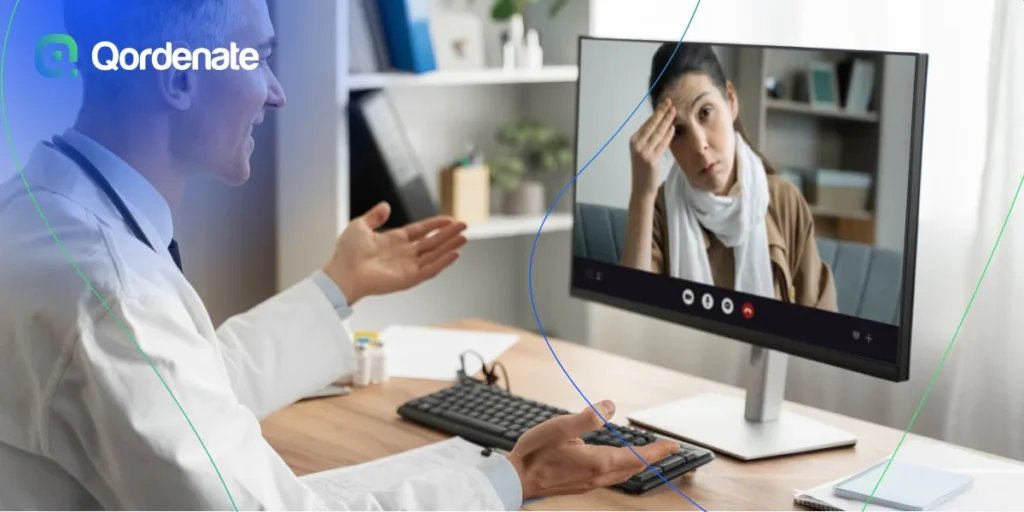
Healthcare providers can communicate with patients who speak different languages during virtual appointments. With real-time AI translation, patients can participate in their preferred language while healthcare professionals follow the conversation through translated audio and captions.
International Healthcare Teams
Hospitals, healthcare networks, and research organisations often collaborate across borders. Multilingual healthcare teams can use real-time translation to support international projects, knowledge sharing, and cross-border healthcare collaboration.
Patient and Family Communication
Family members may join virtual healthcare discussions from different locations and may not all speak the same language. Real-time translation can help more participants understand and contribute to the conversation.
Healthcare Training and Education
Medical organisations can conduct training sessions for staff across different regions. With live translation and captions, one training session can become more accessible to a multilingual workforce.
Public Health Communication
Healthcare organisations and public health bodies may need to communicate important information to communities that speak different languages. Multilingual webinars can help organisations reach broader audiences through translated audio and captions.
Supporting Multilingual Healthcare Teams
Healthcare professionals often work in international or multilingual environments. Healthcare organisations employ doctors, nurses, administrators, and remote specialists from many different countries and language backgrounds.
A multilingual meeting platform allows participants to communicate in their preferred language during the same meeting. This can reduce the mental effort of constantly translating internally and allow professionals to focus more fully on the conversation. For healthcare organisations, live translation can support collaboration without requiring every team member to communicate in a single language.
Why Healthcare Organisations Need Better Multilingual Communication
Language barriers can affect communication between patients, healthcare providers, and international teams.
A multilingual communication platform can help healthcare organisations:
- Improve access to virtual consultations
- Support more inclusive patient communication
- Reduce communication delays
- Improve participation in multilingual meetings
- Support international healthcare teams
- Make healthcare training more accessible
- Improve cross-border healthcare collaboration
The technology supports the communication that allows healthcare professionals and patients to understand one another more effectively.
The Future of Multilingual Healthcare Communication
Healthcare is becoming increasingly connected. Patients consult specialists remotely, medical teams collaborate internationally, and healthcare organisations serve increasingly diverse communities. As these connections grow, communication tools must support more than one language.
Qordenate provides a multilingual meeting environment where participants can speak, listen, read, and contribute in the way that works best for them. Its Real-Time Live Translation, Universal Captions, Multilingual Chat, and VoiceBridge are designed to support communication across languages and different communication needs.
For healthcare organisations, the result is a more accessible and inclusive communication experience. When language is no longer a barrier to understanding, healthcare conversations can become more connected, more inclusive, and more effective.
Ready to make healthcare communication more accessible across languages? Explore Qordenate and talk to our team on how your organisation can make multilingual communication more inclusive and effective.
Frequently Asked Questions
How can live translation help healthcare providers?
AI translation in healthcare can help providers communicate with patients and colleagues who speak different languages through real-time translated speech, live captions, and multilingual chat.
What are healthcare language barriers?
Healthcare language barriers occur when patients, healthcare professionals, or teams cannot communicate effectively because they speak different languages or have difficulty understanding one another.
Can Qordenate support virtual healthcare consultations?
Qordenate can support multilingual video meetings and virtual consultations with real-time AI translation, translated captions, and Multilingual Chat. Healthcare organisations should assess their own privacy, regulatory, and clinical requirements before using any communication platform for specific healthcare workflows.
How does Qordenate support accessible healthcare communication?
Qordenate provides Universal Captions and VoiceBridge. Universal Captions provide live translated captions, while VoiceBridge allows participants to type their contribution and have it converted into spoken audio in listeners’ preferred languages.
Can healthcare teams use Qordenate for international collaboration?
International healthcare teams can use real-time translation, multilingual meetings, universal captions, and Multilingual Chat to support cross-border healthcare collaboration.